SOURCE: TNN
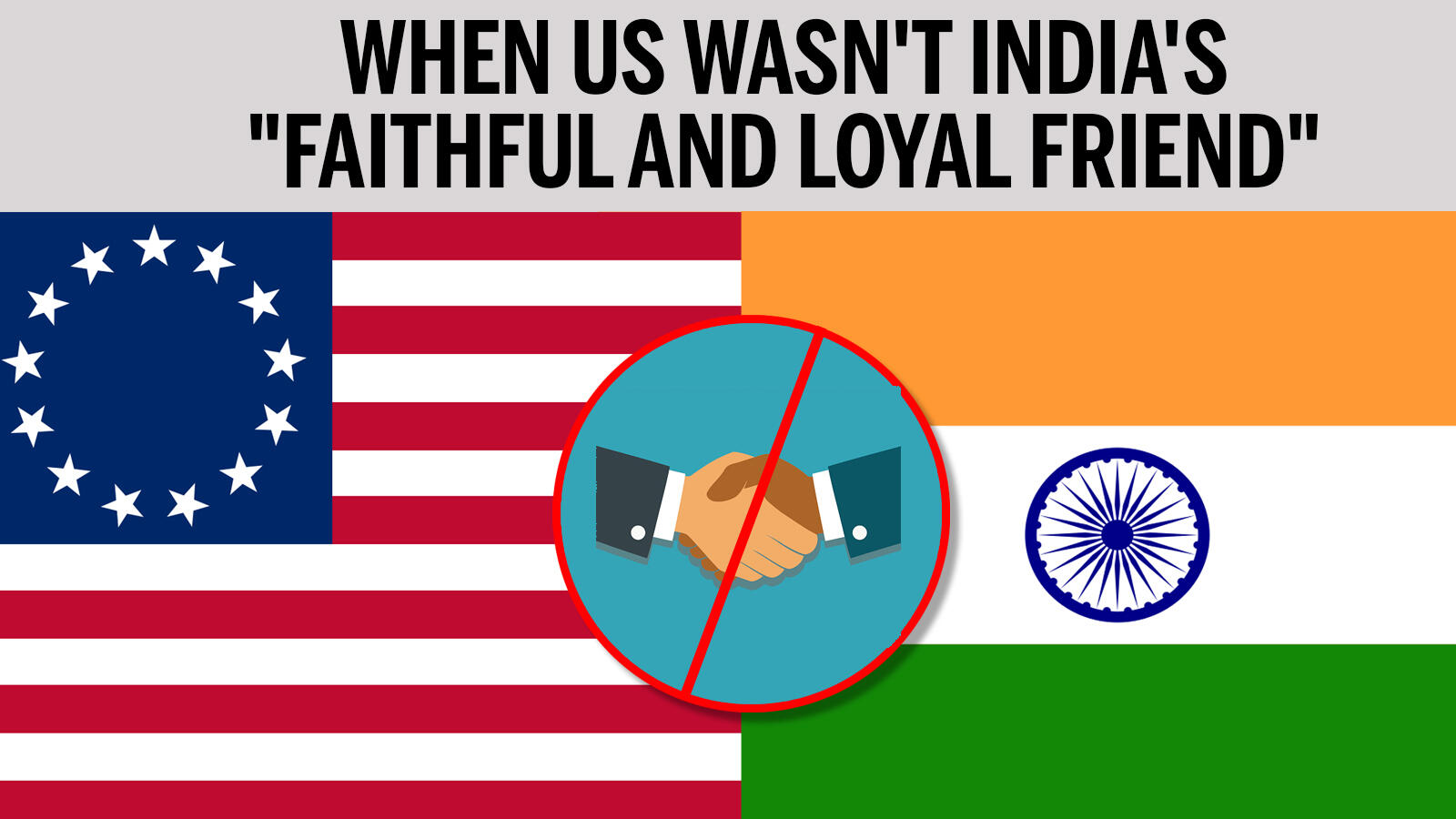
Indulging in diplomatic grandstanding in front of a packed stadium in Ahmedabad, US President Donald Trump said “America will always be a faithful and loyal friend to the Indian people.” In the past, though, US-India relations have fluctuated from warmth and friendship to open hostility.
Friends don’t threaten friends
During the 1971 Indo-Pak war for the creation of Bangladesh, the then US President Richard Nixon ordered the US Navy’s seventh fleet, led by the USS Enterprise nuclear powered aircraft carrier into Bay of Bengal to threaten India to withdraw its offensive in what was then East Pakistan. This is remembered as the almost direct military intervention of the US on behalf of Pakistan. On India’s request, the Soviet Union dispatched nuclear submarines and other surface ships to counter the threat of the Americans.
Friends don’t cripple friends
After the 1998 nuclear tests, the US came crashing down on India by imposing economic sanctions— which were particularly hard as they came in the middle of the Indian economy’s efforts to shed its lethargy of socialism and become a more liberalised economy. The US even recalled its ambassador to India. Earlier, in 1978, after the US enacted the nuclear non-proliferation act that required countries like India who hadn’t signed the NPT to allow international inspectors to inspect its nuclear facilities, Washington ended all nuclear assistance to New Delhi after the latter refused to allow International Atomic Energy Agency (IAEA) inspections.
Friends don’t humiliate friends
One of the low points of the India-US relations in recent times had been the arrest of Devyani Khobragade, the then Indian Deputy Consul General in December 2013. Khobragade was arrested by American authorities in New York for allegedly underpaying her maid and was strip searched, handcuffed and subjected to cavity searches. The incident created an uproar in India and the Indian government responded by initiating a slew of steps in which privileges issued to US diplomats and their families were withdrawn and import clearances given to the embassy were withdrawn. The incident led to the resignation of US Ambassador to India, Nancy Powell.
Friendship isn’t a ‘trade off’
When it comes to bilateral trade, US President Donald Trump has been vocal on the perceived injustice that is meted out to companies in trade ties with India. In 2018, certain trade privileges were withdrawn from India and higher tariffs were imposed on steel and aluminium products.
Washington has been asking for removal of the “developing nation” tag from India at the World Trade Organisation (WTO). The tag enables developing countries to seek various trade benefits, such as entitlement to longer timeframe for the imposition of safeguards, generous transition periods, softer tariff cuts, procedural advantages for WTO disputes and the ability to avail themselves of certain export subsidies. Trump said India and China — two economic giants of Asia — are no longer developing nations and as such they cannot take advantage of this benefit from the WTO, an intergovernmental organisation that regulates international trade among nations.
Trump has been a vocal critic of India for levying “tremendously high duties” on US products and has described the country as a ‘tariff king’. A few days ahead of his visit to India, the Trump- administration terminated India’s preferential trade status, part of a program dating back to the 1970s that allows products from developing countries to enter the US market duty free. The reason given by the US was that India has not provided “equitable and reasonable access” to its own market and was not a developing country as it was part of the G20 group.
from Indian Defence Research Wing https://ift.tt/3aLjyAS
via IFTTThttp://idrw.org

No comments:
Post a Comment