Tuesday, 31 December 2019

Reserve right to strike at terror source, says Army chief Naravane in clear warning to Pakistan

SOURCE: HT

Indian Army chief General MM Naravane said on Tuesday India reserves the right to pre-emptively strike at sources of terror threat if Pakistan does not stop state-sponsored terrorism. The newly-appointed army chief said a strategy of “resolute punitive response” has been evolved to tackle cross-border terrorism.

“The Pakistan army’s proxy war design received a setback due to elimination of terrorists and decimation of terror networks (by India),” General Naravane was quoted as saying by news agency PTI.

“Multiple options across the spectrum of conflict are on the table to respond to any act of terror sponsored or abetted by Pakistan,” he said, according to Press Trust of India, hours after taking charge as the Chief of Army Staff.

In a strong signal to Pakistan, Gen Naravane said India is prepared to tackle any threat.“Our neighbour is trying to use terrorism as a tool of state policy, as a way of carrying out a proxy war against us while maintaining deniability. However, this state can’t last long, as they say, you can’t fool all the people, all the time,” Gen Narvane said in another interview to ANI.

“As far as the situation on the LoC is concerned, it is what it was in the recent past. There are ceasefire violations, we are aware that there are terrorists on the other side in various launchpads waiting to cross over but we are fully prepared to meet this threat,” he said.

“We have a strong counter-insurgency and counter-terrorist grid which we keep modifying as per the input we receive and we are fully prepared to tackle any eventuality,” added.

Gen Naravane, who succeeded Gen Bipin Rawat, had served as vice-chief of the army before taking charge of the 1.3 million-strong force on Tuesday.

The 60-year-old has served in numerous command and staff appointments in peace, field and highly active counter-insurgency environments in Jammu and Kashmir and the northeast in his 37 years of service.

He has also headed the force’s Eastern Command that takes care of India’s nearly 4,000-km border with China. He also commanded a Rashtriya Rifles battalion in Jammu and Kashmir and an infantry brigade on the eastern front.

Gen Bipin Rawat, who retired on Tuesday as the army chief, is set to take over as the first Chief of Defence Staff (CDS).


from Indian Defence Research Wing https://ift.tt/2MFB6VF
via IFTTThttp://idrw.org

Abrogation of Article 370 led to decline of terrorist incidents in Kashmir: New Army chief

SOURCE: PTI

In a stern warning to Pakistan, new Army Chief Gen Manoj Mukund Naravane on Tuesday said India reserves the right to preemptively strike at sources of terror if the neighbouring country does not stop state-sponsored terrorism. In an exclusive interview to PTI hours after taking charge of the 1.3-million-strong force, Gen Naravane also said the Army will enhance combat capabilities along the border with China so that it is fully prepared to deal with any challenge.

“The threat remains from both the northern and western sides. Over the last many years, we have been concentrating on our western borders while our northern border was at a little lower in priority. There was a need to rebalance and reprioritise,” he said. Giving an overall perspective of India’s security challenges, he said the focus is being shifted from the western border to the northern border as part of “re-balancing of priorities”.

On combating cross-border terrorism, Gen Naravane said a strategy of “resolute punitive response” was put in place to deal with Pakistan-sponsored terrorism and asserted that the situation in Kashmir improved significantly after the abrogation of Article 370.

If Pakistan does not stop its policy of state-sponsored terrorism, we reserve the right to preemptively strike at the sources of the terror threat and this intent has adequately been demonstrated in our response during surgical strikes and Balakot operation,” the Army Chief said.

He said an approach of zero tolerance to terror has already been showcased and a “new normal” in India’s response mechanism has emphatically been underlined.

“The situation in the Valley has improved significantly after the abrogation of Article 370. Incidents of violence are coming down. The terrorists-initiated actions have come down. There is no doubt that there is a lot of improvement,” the 28th Chief of Army Staff said.

“However the problem remains. It has not gone away. So we will always be ready whatever measures are required to deal with the challenges,” he said.

Gen Naravane said the Pakistan Army’s “all out efforts” to deflect attention from state-sponsored terrorism has been a total failure and that its proxy war design received a setback due to elimination of terrorists and decimation of terror networks by Indian forces.

Asked how he will deal with Pakistan-backed terrorism, he said, “Multiple options across the spectrum of conflict are on the table to respond to any act of terror sponsored or abetted by Pakistan.”

Gen Naravane said Pakistan tried to draw global attention following India’s decision to reorganise Jammu and Kashmir, but its efforts did not get any traction.

Referring to the rising number of ceasefire violations along the Line of Control (LoC), he said it is being done to keep alive the Kashmir issue.

On security challenges along the 3,500-km border with China, Gen Naravane said: “We will continue to improve capacity building along the northern border so we are prepared when the need arises.”

“After the Wuhan summit, both nations have issued strategic guidance to their respective forces with an aim to maintain peace and tranquillity along the borders, locally resolve differences and not allow them to turn into disputes,” he said.

“The guidance has manifested on the Line of Actual Control (LAC) and conduct of troops from both sides has been cordial despite some prevailing differences, differing perceptions of the LAC and some friction in sensitive areas,” he said.

Referring to the appointment of a Chief of Defence Staff, he said it will greatly change the way the defence establishment operates and will bring about significant reforms in the entire military system.

His main focus as Army chief will be to make the force ready to face any threat at any time, the general said.

According to him, the bottomline for reforms in the Army will be to increase efficiency and operational readiness.

“Modernisation is a continuous process. Whatever we are doing, the start point is to increase efficiency and operational readiness,” he said.


from Indian Defence Research Wing https://ift.tt/2ZHJ45G
via IFTTThttp://idrw.org

ISRO to attempt second lunar landing in 2020, cost will be lesser than Chandrayaan-2: Centre

ISRO to attempt second lunar landing in 2020, cost will be lesser than Chandrayaan-2: Centre

Published January 1, 2020

|

By admin

SOURCE: PTI

India will launch Chandrayaan-3 in 2020, Union Minister Jitendra Singh said on Tuesday, asserting that the mission cost will be less than Chandrayaan-2. Singh, who is the Minister of State in the Prime Minister’s Office, said it is wrong to term Chandrayaan-2 as a disappointment since it was India’s maiden attempt to land on the lunar surface and no country could do so in its first attempt.

“Yes, the lander and rover mission will most likely happen in 2020. However, as I have said before, the Chandrayaan-2 mission cannot be called a failure as we have learnt a lot from it. There is no country in the world that has landed on its first attempt. The US took several attempts. But we will not need so many attempts,” Singh said.

He added that the experience gathered from Chandrayaan-2 and available infrastructure will bring down the cost of Chandrayaan-3.

He, however, declined to specify the month of the third lunar mission launch. Chandrayaan-2 mission was India’s first attempt to land on the lunar surface.

The ISRO had planned the landing on the South Pole of the lunar surface. However, the lander Vikram hard-landed. In written response to a question in the Winter session of Parliament, Singh said, “The velocity was reduced from 1683 m/s to 146 m/s. During the second phase of the descent, the reduction in velocity was more than the designed value. Due to this deviation, the initial conditions at the start of the fine braking phase were beyond the designed parameters. As a result, Vikram hard landed within 500 m of the designated landing site.”


from Indian Defence Research Wing https://ift.tt/2Qwd4xq
via IFTTThttp://idrw.org

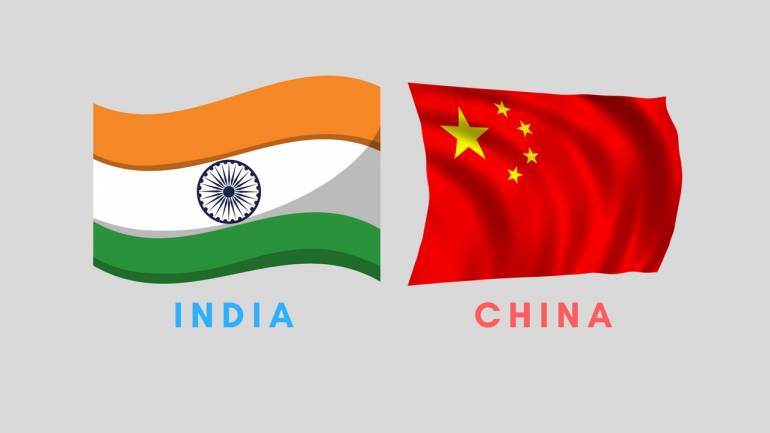
Indo-China border dispute: Is a resolution finally on the cards?

SOURCE: MONEY CONTROL

India and China have locked horns for decades over a land boundary dispute and resolution might just be underway. After national security adviser Ajit Doval’s meet with China’s state councillor Wang Yi in Delhi at the 22nd dialogue of the Special Representatives (SR), both countries decided to maintain peace along the Line of Actual Control (LAC).

Keeping that in mind, India has decided to consider the neighbouring country’s “early harvest” proposal to arrive at a consensus over the Sikkim land boundary. However, they will continue to do so only if the middle sector in Uttarakhand is also demarcated. Only then can the phased resolution of the border dispute be kick-started.

Talks on this had begun way back in 2002 with both countries exchanging maps of the middle sector, but a long period of impasse followed marked with occasional skirmishes.

According to a Hindustan Times report, China wished for both New Delhi and Beijing to begin dialogue to “promote early harvest consultations”, but no such proposal had come in from the Indian side.

While the Chinese said the “early harvest” proposal was tabled in August 2019, the Indian leaders still considered demarcating border in Sikkim as a “low-hanging fruit”. However, the latter has now urged Beijing to show equal sincerity in solving the middle sector dispute, especially since the People’s Liberation Army (PLA) is overshadowed by the dominance of the Indian Army and Bhutan Army in Chumbi Valley at present.

Explaining the issue, a former Indian Army chief said: “The Sikkim proposal is not so simple. Any agreement on demarcation will be exploited by China to settle the boundary with Bhutan with an eye towards Doklam plateau. If India settles Sikkim, where it dominates both Chumbi Valley and Finger Area up in the north, then China will expand its Chumbi Valley area and increase pressure on West Bengal’s Siliguri corridor.”

If the border dispute in Sikkim sector is settled it will directly affect Doklam, which saw heightened tension following a military stand-off in 2017. This, in turn, will make the India-China-Bhutan junction at Batang La vulnerable, further exposing the Siliguri corridor to PLA.

Commenting on this, a China expert said: “If the Chinese get to Jhampheri ridge, then the entire Siliguri corridor becomes extremely vulnerable to the PLA. The lights of Gangtok are visible from Jhampheri ridge.”

Despite all the risks, India has agreed to consider China’s Sikkim proposal, provided they agree to resolves the middle sector dispute simultaneously.

Moreover, as India’s former foreign secretary Kanwal Sibal, explained, the early harvest proposal is in violation of a 2005 agreement on resolving boundary issues that clearly laid down that it needs to be a package deal.

He added: “This is the usual Chinese way of walking out of agreements. This early harvest proposal relates only to the Sikkim border. How is India benefiting out of this? On the contrary, China will try to settle the tri-junction in its favour through this proposal which is unacceptable.”


from Indian Defence Research Wing https://ift.tt/2QyvihT
via IFTTThttp://idrw.org

Centre mulls making process of granting citizenship under CAA online to bypass states

SOURCE: PTI

The Centre is likely to make the entire process of granting citizenship under the Citizenship Amendment Act online to bypass states, some of which are dead set against the new legislation, officials said on Tuesday.

The Ministry of Home Affairs is mulling the option of doing away with the present procedure of routing applications for citizenship through the district magistrate in view of the strong opposition expressed by several states, including Kerala which on Tuesday passed a resolution in the Assembly demanding scrapping of the controversial Act.

“We are thinking of designating a new authority instead of the district magistrate and make the entire process of application, examination of documents and granting Indian citizenship online,” a Home Ministry official said.

If the process becomes completely online, there will be no intervention from a state government at any level.

Besides, the home ministry officials are of the opinion that the state governments have no power to reject the implementation of the Citizenship Amendment Act as the legislation was enacted under the Union List of the 7th Schedule of the Constitution.

“The states have no power to deny implementation of a central law which is in the Union List,” the top official from the Home Ministry said.

There are 97 items which are under the Union List that include Defence, External Affairs, Railways, Citizenship and Naturalisation.

According to the amended Citizenship Act, members of Hindu, Sikh, Buddhist, Jain, Parsi and Christian communities who have come from Pakistan, Bangladesh and Afghanistan till December 31, 2014 and facing religious persecution there will not be treated as illegal immigrants but given Indian citizenship.

The Act says refugees of the six communities will be given Indian citizenship after residing in India for five years, instead of 11 years earlier.

The act also proposes to give immunity to such refugees facing legal cases after being found as illegal migrants.

The Kerala Assembly had on Tuesday passed a resolution demanding scrapping of the controversial Act, amid raging countrywide protests against the legislation.

The ruling CPI(M)-led LDF and the opposition Congress-led UDF supported the resolution while the BJP’s lone MLA and former Union minister O Rajagopal’s was the only dissenting voice in the one-day special session.

The house adopted the resolution moved by Chief Minister Pinarayi Vijayan.

Vijayan had said that “an anti-constitutional law will have no place” in his state.

A number of chief ministers, including those of West Bengal, Punjab, Madhya Pradesh and Chhattisgarh, had already announced that the law is “unconstitutional” and has no place in their respective state.

West Bengal Chief Minister Mamata Banerjee had said, “In your (BJP) manifesto, instead of development issues, you have put in promise to divide the country. Why will citizenship be on the basis of religion? I will not accept this. We dare you. “You can pass laws in Lok Sabha and Rajya Sabha forcefully because you have the number. But we will not let you divide the country,” she said.

Describing the Act as a direct assault on India’s secular character, Punjab Chief Minister Amarinder Singh had said his government would not let the legislation to be implemented in his state.

“We have a majority in the assembly and will block the bill,” Singh said.

Chhattisgarh Chief Minister Bhupesh Baghel had said the Act was clearly unconstitutional.

“Whatever decision is made at the Congress party forum on the bill, will be applied in Chhattisgarh,” he said.

Madhya Pradesh Chief Minister Kamal Nath had said, “Whatever stand the Congress party has taken on Citizenship Amendment Act, we will follow that. Do we want to be a part of a process that sows seeds of divisiveness?”.

Senior Congress leader P Chidambaram had also said the bill was a “brazen assault” on the fundamental ideas enshrined in the Constitution and the fate of the law will be decided in the Supreme Court.


from Indian Defence Research Wing https://ift.tt/2SKw91A
via IFTTThttp://idrw.org

160 terrorists killed and 102 arrested in J&K in 2019, decrease in local youths joining militancy: DGP

SOURCE: ENS

As many as 160 terrorists were killed and 102 arrested in Jammu and Kashmir in 2019, while 250 ultras were still active, Director General of Police (DGP) Dilbag Singh said on Tuesday, noting that the number of local youths joining militancy has decreased. He said that there is 30 per cent fall in terrorist incidents, less civilian killings and 36 per cent decrease in law and order incidents as compared to last year.

“218 such (local) youths joined militant outfits in 2018 but only 139 joined in 2019,” Singh said at the annual press conference at police headquarters here. Out of these new recruits, only 89 have survived. “The rest have been eliminated as their shelf life is between 24 hours to 2-3 months after joining militancy. There are hardly few old terrorists surviving, which include Jehangir Saroori and Riyaz Nayikoo”, he said.

There have been only 481 law and order incidents this year as compared to 625 last year, he said “250 terrorists have been active in Jammu and Kashmir. There is a decrease in the number of active militants as compared to last year,” Singh said.

There were 80 per cent successful anti-terror operations in which 160 terrorists, including foreigners, have been killed during the year.

“Eleven valiant police personnel from Jammu and Kashmir besides 72 from other security forces have been martyred,” he said.

Singh said 102 terrorists have been arrested and 10 terrorists surrendered during the year.

Also, there was no collateral damage during anti-terror operation as people fully cooperated.

“There was zero law and order problem this year (during anti-terror operations),” he added.

The DGP said that “there has been a high degree of incidents of infiltration attempts from across the border this year and also ceasefire violations.

But security forces have successfully foiled these attempted as 130 infiltrators have entered in 2019 as compared to 143 last year”.

Replying to queries on the restoration of internet, the DGP said it is under consideration.

“I think J-K is moving towards such a situation (on law and order front). Very soon you will hear the positive announcement,” Singh said.

He said that though some people will try to misuse the internet, “in the past, we took care of them and we will take care of such people in the future too”.

Internet services in all government-run hospitals and SMS to all mobile phones will be restored from December 31 midnight in the Kashmir Valley, Jammu and Kashmir official spokesman Rohit Kansal said on Tuesday.

On December 10, some short message service (SMS) was enabled on mobile phones in order to facilitate students, scholarship applicants, traders and others.

It has now been decided to fully restore the service throughout Kashmir from midnight of December 31, Kansal said.

Mobile Internet services were restored in Kargil district of Ladakh on Friday after remaining suspended for 145 days in the wake of the Centre abrogating provisions of Article 370 of the Constitution, officials said.

Internet services were suspended on August 5, the Centre announced the abrogation of Article 370 and bifurcation of the state into the union territories of Jammu and Kashmir and Ladakh.


from Indian Defence Research Wing https://ift.tt/2QdgZjF
via IFTTThttp://idrw.org

Third unit of Kakrapar atomic reactor to be commissioned in April

Third unit of Kakrapar atomic reactor to be commissioned in April

Published January 1, 2020

|

By admin

SOURCE: PTI

The Department of Atomic Energy will commission one nuclear reactor every year from 2020, starting with the third unit of the Kakrapar Atomic Power Station in Gujarat, Union minister Jitendra Singh said. The 700-MW pressurised heavy water reactor is likely to be commissioned by April, Singh, who is a minister of state in the Prime Minister’s Office, said in an interaction with reporters in New Delhi.

“We will commission one nuclear reactor every year from 2020. Kakrapar-3 should be commissioned in 2020,” Singh said. A senior Department of Atomic Energy (DAE) official said the fourth unit of the power station would likely to be commissioned by 2021. The Nuclear Power Corporation of India Ltd (NPCIL) has 22 reactors.

Shrikrishna Gupta, a senior DAE official, said the Tarapur Atomic Power Reactors — units 1 and 2 — completed 50 years of operation this year. The two boiling water reactors — the first in the country — were commissioned in October 1969. He said the Kaiga Power Station unit 1 also created a world record by operating for 941 days.


from Indian Defence Research Wing https://ift.tt/35a756F
via IFTTThttp://idrw.org