Monday, 18 June 2018

Arab Media and its Silent War against India on Kashmir
SOURCE: ABHOY ROY / FOR MY TAKE / IDRW.ORG

Biased UN Report might have come as a shocker to many in India which for the first time in 70 years seems to have sided with Pakistan’s narrative on Kashmir and their propaganda and blamed everything on India and its security forces. The report might be first coming from an International body but may not be the last, since last few years great International efforts have been made by some Muslim organization backed by certain officials in Arab governments to bring Kashmir and Palestine issues on par to grab world attention.
While World media is quite sympathetic towards Palestine issues largely remains anti-Israeli when it comes to reporting and propaganda, the same level of support seems to be clearly missing in dominant western media even though one-off articles and reports do come on against India on Kashmir but support for Pakistan is nil due to its deep-rooted association with terrorism in the region due to which India has managed to keep Kashmir off International attention.
But things are changing rapidly and Arab media now have taken up for them self to highlight Kashmir issue at the International stage with the most biased anti-India reports coupled up with distorted facts and peculiar silence on the support of terror from across the border. Section of Indian media fraternity are helping their cause and have also managed to link Kashmir violence with rising of Hindu Nationalism in India and how Minorities especially Muslims are unsafe in India.
The killing of dreaded terrorist Burhan Muzaffar Wani, who was former commander of Hizbul Mujahideen and pro majoritarianism policies of Bharatiya Janata Party after it came to power in 2014 can be attributed as a trigger point of Arab media to build a narrative against India on Kashmir so it get the same level of attention like they are able to gather for the Palestine issues whether diplomatically or in International media .
Touch Baier of Arab media propaganda on Kashmir and against India has to be state-funded Qatar based Al Jazeera Media company which uses all available platforms at its disposal to sell the narrative of its rulers on world issues including Kashmir. Al Jazeera’s repeated meddling and biased reports on Arab countries have lead to Several Arab countries blocking Al-Jazeera websites and taking down its English and Arabic 24/7 News Channels.
Al Jazeera has not limited its self to meddling and biased reporting only towards Arab countries, even India has been at receiving end first on Kashmir issue and now with anti-government basing while trying to cash on narrative being paddled by opposition supported Indiana media channels about growing intolerance towards India’s minorities especially Muslims in India.
But if you dig deeper and you will find that reports against India were coming at a steady rate even when so-called seculars wherein power in India and reporting over Kashmir largely remained biased towards India and terror incidents in India were severally downgraded to suit their agenda.
Al Jazeera in 2015 was told to go off air in India for 5 days after it kept showing wrong Indian Map even after repeated warnings over past few years. Almost all times Kashmir region was not shown in India and even some time India’s islands like Andaman and Nicobar Islands and Lakshadweep.
According to other reports, Al Jazeera reporters visit Kashmir region on normal Tourist Visa and do reports without permission of local authorities. According to Indian laws, all International Journalist can only come to India for coverage only on journalist visas but the wait can be long for the visa to be approved so new team and new people send in batches to dodge Indian Authorities.
Off late many in India are seeing many articles and reports on current government and Modi on their timelines from a news channel based in Istanbul, called TRT World. A peek into the comment section and it is evident that many of the commentators are from India or region which have plenty of further propaganda, coverage is not limited to just the current government, the large focus is also on Kashmir which largely is bias and not so pro India in nature.
A quick look into Video uploaded by Al Jazeera and TRT World on popular protoforms like Youtube where on reports or debates, anti-India bias in very difficult to be hidden by the anchors also with commentators who come on the show often regularly. On and off use of Indian voices in their shows also brings credentials to their arguments on Kashmir which could be condemned in India otherwise.
Disclaimer : Articles published under ” MY TAKE ” are articles written by Guest Writers and Opinions expressed within this article are the personal opinions of the author. IDRW.ORG is not responsible for the accuracy, completeness, suitability, or validity of any information on this article. All information is provided on an as-is basis. The information, facts or opinions appearing in the article do not reflect the views of IDRW.ORG and IDRW.ORG does not assume any responsibility or liability for the same. article is for information purposes only and not intended to constitute professional advice .
Article by ABHOY ROY /, cannot be republished Partially or Full without consent from Writer or idrw.org
from Indian Defence Research Wing https://ift.tt/2K1JrTn
via IFTTThttp://idrw.org
Chinese Envoy Pitches India-China-Pak Meet as Suggested by ‘Some Indian Friends’
SOURCE: PTI
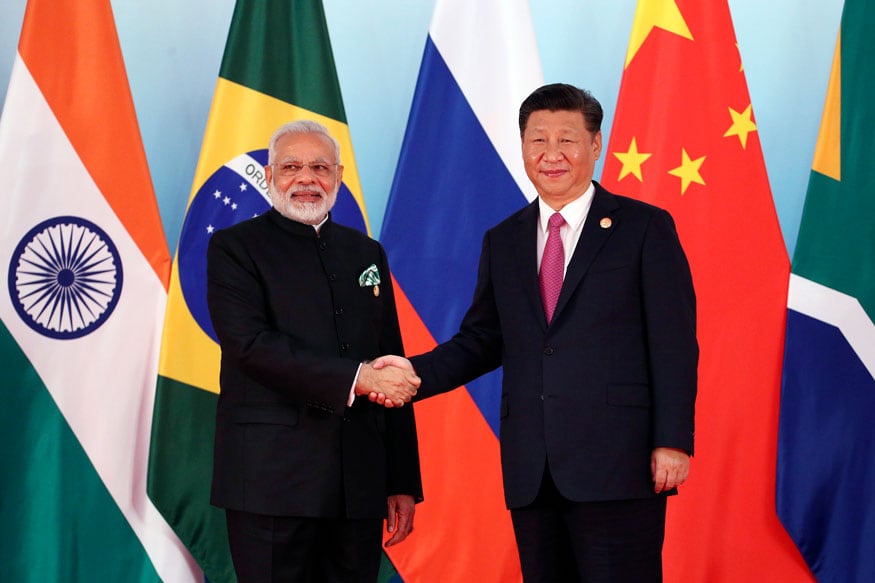
Bilateral ties between India and China can’t take the strain of another Doklam episode, Chinese envoy to India Luo Zhaohui said on Monday, emphasising on the need to find a “mutually acceptable solution” on the boundary issue through a meeting of the Special Representatives.
The Chinese envoy said at an event here that “some Indian friends” had suggested a trilateral summit comprising India, China and Pakistan, which was a “very constructive” idea.Dwelling on Sino-Indian ties, he said it is quite natural to have differences but they need to be controlled and managed through cooperation.
“We need to control, manage, narrow differences through expanding cooperation. The boundary question was left over by history. We need to find a mutual acceptable solution through Special Representatives’ Meeting while adopting confidence building measures,” he said.
“We cannot stand another Doklam (sic),” the envoy said.
He was delivering a keynote address on ‘Beyond Wuhan: How Far and Fast can China-India Relations Go’ at an event organised by the Chinese Embassy here.
Indian and Chinese troops were involved in a 73-day stand-off at the Doklam tri-junction of India, Bhutan and China between June to August last year.
One of the immediate fallouts of the Doklam stand-off was the suspension of the Kailash Mansarovar Yatra from Nathu-La side and the annual military exercise between the two countries. China also did not give the hydrological data of the Brahmaputra and the Indus river that originates in Chinese Tibet.
The envoy today said China will continue to promote religious exchanges and make arrangements for Indian pilgrims going to Kailash Mansarovar in Tibet.
Post-Doklam, there have been frequent high-level engagements between the leaders of the two countries.
This year alone, Prime Minister Narendra Modi and Chinese President Xi Jinping have met twice in the last two months in Wuhan and Qingdao.
Luo said the two leaders are also likely to meet on the sidelines of the BRICS Summit and G20 Summit later this year.
He noted that security cooperation is one of the three pillars of the Shanghai Cooperation Organisation, an eight-member grouping also comprising India, China and Pakistan.
The envoy said the proposal of India, China and Pakistan holding a trilateral summit was “very constructive”. Leaders of China, Russia and Mongolia hold a similar meet, he noted.
“This is a proposal suggested by some Indian friends and it is a very a good and constructive idea. Maybe not now, but in the future, that is the great idea.”
The envoy added that relations between India and China have gone beyond the bilateral scope.
“We need to enhance coordination and cooperation in SCO, BRICS and join hands to tackle social challenges,” he said.
Responding to a question on India-China cooperation in Afghanistan, Luo said the two countries have identified a programme to train Afghan public servants and diplomats.
“This is a first step and in future, there is more…,” he said.
In the informal summit between Modi and Xi at the Wuhan, the two countries had agreed to work jointly on an economic project in Afghanistan.
from Indian Defence Research Wing https://ift.tt/2HYhqHl
via IFTTThttp://idrw.org
India lines up Dornier aircraft for Seychelles
SOURCE: ET

India is planning to gift a Dornier aircraft to Seychelles and explore trilateral cooperation involving France that will safeguard its strategic interests in the backdrop of President Danny Faure’s announcement to cancel the project to jointly develop a naval base on Assumption Islandahead of his June 25 Delhi visit.
India plans to gift Seychelles a Dornier aircraft this month — second such aircraft that could be gifted to the Indian Ocean Region, said people aware of the matter. An Indo-French-Seychelles trilateral cooperation may safeguard India’s strategic interests in the key Indian Ocean country amid China’s growing interests in the region.
India and France joined hands in March for strategic partnership in the western part of the Indian Ocean region. The two countries share a logistic service agreement to support each other naval forces in the Indian Ocean Region. France also has strategic interests in Seychelles and recently engaged with Faure to expand French-Seychelles strategic ties.ET has learnt that India is helping revive an old airstrip on Assumption Island along with other upgradation work.
The proposed joint project, the scrapping of which is yet to be officially communicated to the Indian defence establishment, entailed investment of $550 million in the development of an airstrip, jetty and housing infrastructure for the Seychelles Coast Guard in Assumption Island.
While Faure had mentioned in his June 4 press meet that there would be no discussion on the project during his India visit – the third meet between him and PM Narendra Modi this year – the project signed in 2015 and revised in January 2018 will cast a shadow on the visit. Experts said the project is a victim of domestic politics in Seychelles, where the opposition is not willing to compromise and has made it a controversial issue of violation of Seychelles sovereignty to pin down Faure government. However, India is approaching the issue deftly to prevent Faure’s visit getting entangled in domestic politics.
Changes in foreign secretary and principal secretary in Seychelles have slowed progress further. The biggest setback was the text of the detailed project report (DPR) being leaked on YouTube, sparking a controversy and questions over the nature of the deal.
The controversy, however, could not dent growing defence ties between India and Seychelles. In 2017, 11 Indian naval ships visited Seychelles and eight have visited Seychelles so far this year. Half of Seychelles’ military assets have been provided by India, which has trained around 70% of Seychelles’ military personnel.
from Indian Defence Research Wing https://ift.tt/2JZqTDs
via IFTTThttp://idrw.org
India, China ties cannot take strain of another Doklam, says Chinese envoy Luo Zhaohui
SOURCE: PTI

Bilateral ties between India and China can’t take the strain of another Doklam episode, Chinese envoy to India Luo Zhaohui said today, emphasising on the need to find a “mutually acceptable solution” on the boundary issue through a meeting of the Special Representatives.
The Chinese envoy said at an event here that “some Indian friends” had suggested a trilateral summit comprising India, China and Pakistan, which was a “very constructive” idea.
Dwelling on Sino-Indian ties, he said it is quite natural to have differences but they need to be controlled and managed through cooperation.
“We need to control, manage, narrow differences through expanding cooperation.
The boundary question was left over by history.
We need to find a mutual acceptable solution through Special Representatives’ Meeting while adopting confidence building measures,” he said.
“We cannot stand another Doklam (sic),” the envoy said.
He was delivering a keynote address on ‘Beyond Wuhan: How Far and Fast can China-India Relations Go’ at an event organised by the Chinese Embassy here.
Indian and Chinese troops were involved in a 73-day stand-off at the Doklam tri-junction of India, Bhutan and China between June to August last year.
One of the immediate fallouts of the Doklam stand-off was the suspension of the Kailash Mansarovar Yatra from Nathu-La side and the annual military exercise between the two countries.
China also did not give the hydrological data of the Brahmaputra and the Indus river that originates in Chinese Tibet.
The envoy today said China will continue to promote religious exchanges and make arrangements for Indian pilgrims going to Kailash Mansarovar in Tibet.
Post-Doklam, there have been frequent high-level engagements between the leaders of the two countries.
This year alone, Prime Minister Narendra Modi and Chinese President Xi Jinping have met twice in the last two months in Wuhan and Qingdao.
Luo said the two leaders are also likely to meet on the sidelines of the BRICS Summit and G20 Summit later this year.
He noted that security cooperation is one of the three pillars of the Shanghai Cooperation Organisation, an eight-member grouping also comprising India, China and Pakistan.
The envoy said the proposal of India, China and Pakistan holding a trilateral summit was “very constructive”.
Leaders of China, Russia and Mongolia hold a similar meet, he noted.
“This is a proposal suggested by some Indian friends and it is a very a good and constructive idea. Maybe not now, but in the future, that is the great idea.”
The envoy added that relations between India and China have gone beyond the bilateral scope.
“We need to enhance coordination and cooperation in SCO, BRICS and join hands to tackle social challenges,” he said.
Responding to a question on India-China cooperation in Afghanistan, Luo said the two countries have identified a programme to train Afghan public servants and diplomats.
“This is a first step and in future, there is more,” he said.
In the informal summit between Modi and Xi at the Wuhan, the two countries had agreed to work jointly on an economic project in Afghanistan.
from Indian Defence Research Wing https://ift.tt/2levraK
via IFTTThttp://idrw.org
Is China behind Seychelles’ decision to scrap India’s military base project?
SOURCE: Oneindia News

India’s headaches in its surroundings seem to be multiplying with each passing day. After its relationship with Maldives took a beating recently over the latter’s president’s excesses, it is now turn of Seychelles to leave New Delhi dejected.
The archipelago in the Indian Ocean which India tried to win over to reduce its gap with China in the strategic race in South Asia and the adjoining areas has decided not to proceed with a deal with New Delhi to invest $550 million for setting up a military base in one of its islands — Assumption, reports said.
Seychelles’ President Danny Faure announced the decision earlier this month and ahead of his visit to India on June 25. He also said that the issue will not be taken up during his meeting with Prime Minister Narendra Modi and that Seychelles will build the project by itself.
The pact, which created much uproar in Seychelles’ domestic politics, was first announced when Modi made a visit to the island-nation early 2015 along with Mauritius and Sri Lanka (the trip to the Maldives was cancelled) primarily to build a counter-strategy against China’s ambitions in the Indian Ocean Region (IOR). The pact faced initial hurdles and former foreign secretary S Jaishankar made an urgent visit to Seychelles last year to resolve the problem. He went there again in January this year to approve the renegotiated pact.
The pact with Seychelles was first announced during Narendra Modi’s visit to the strategic Indian Ocean archipelago nation in 2015. The deal faced hurdles and former Foreign Secretary S Jaishankar had to make an unannounced visit to Seychelles in October 2017 to resolve the differences. He visited the country again in January to sign the renegotiated agreement covering 20 years.
But a script similar to Nepal unfolded thereafter. There was an uproar that the Seychelles government “sold off” Assumption Island to India and even though Jaishankar’s successor Vijay Gokhale went to the island-nation in May to save the agreement, he couldn’t. In 2015, Jaishankar was sent to the Himalayan country to resolve the crisis that emanated from its constitutional progress and affected the relation between New Delhi and Kathmandu. With Faure now announcing Seychelles’ decision to not to proceed further on the pact, South Block will now have a major worry over the growing Chinese presence in the IOR region.
India has reportedly sought clarification from the Seychelles’ leadership over its move for the actual concern is not the island-state funding the project but India’s ouster from it when China is cementing its foothold in the strategic region.
It is understandable that India felt being let down after three years of negotiations and also helping Seychelles to improve its own infrastructure by helping to set up a Costal Radar Surveillance system and granting the archipelago three fast-track patrol vessels and a Dornier aircraft. India is now really worried to know what Seychelles wants to do with the project it has refused to take forward with India.
Seychelles has decided against taking the project forward because of its domestic political compulsions; opposition to the idea of getting involved in India’s rivalry with China in the region and also the possibility of environmental damages because of the military practices. As a sovereign country, it has every right to do whatever it feels serves its national interests.
However, for India, the risk is more.
Chinese visitors in Seychelles have increased manifold in recent years
Indian intelligence has gathered reports that the number of Chinese visitors in Seychelles have sharply risen over the last few years and the two countries have also been considering new ways of cooperation in the defence sector.
In November 2016, Deputy Chief of the Joint Staff Department at China’s Central Military Commission General Wang Guanzhong went to Seychelles along with his delegates to improve their defence ties. It can be mentioned here that the defence ties between Seychelles and China have gained momentum since they signed a Memorandum of Understanding, way back in October 2004.
On the occasion, President Faure, who met the Chinese general, said: “The story of the development of Seychelles cannot be taken for granted without making reference to all the contributions from China.”
In 2011, China said it would set up first military base abroad in Seychelles
In December 2011, China had announced that it would set up its first military base abroad in Seychelles seeking supplies and recuperating facilities for its naval forces.
The Indian defence ministry had then said that there was nothing wrong in China’s action for it seemed to Beijing’s efforts to deal with piracy in the IOR. It was the Congress-led United Progressive Alliance which was in power in New Delhi then.
Chinese military analysts later said that the plan to set up the facility did not mean setting up a military base. It repeatedly reaffirmed its policy of not setting up military bases abroad and said the policy would never change. However, Beijing went on to open its first military base abroad in August 2017 in Djibouti in the Horn of Africa.
India was eyeing its own facility in Seychelles, located 2,323 kilometres from Djibouti but now, the IOR archipelago’s decision has put its plan in a complete jeopardy. India’s plan to repeat its ploy of ‘countering Gwadar by Chabahar’ in IOR has hit a wall and it will be worth to see how the Modi government responds to this crucial blow.
Is China behind Seychelles’ refusal?
Has China played a role behind Seychelles’ change of attitude towards India? It certainly has played a clearer role in countries like the Maldives, Sri Lanka and Nepal besides of course Pakistan to fuel the anti-India sentiments, but it is still not so clear whether the same has been repeated in Seychelles as well.
But one thing is certain and that is the economic vulnerability of these democracies make them easy prey for countries like China that allure them towards development in lieu of gaining more influence there as part of its bigger plan to corner its rivals – regional or global.
The unstable political leaderships of the smaller countries also prefer shortcut routes to economic gains for their own survival and they play off one big power against another to serve their selfish interests.
After the Maldives episode, the development in Seychelles will put the Modi government under a lot of stress in handling China’s ambitious plans. The stakes are high for New Delhi to prevent China turning the IOR into another South China Sea-like zone where it holds an upper edge.
from Indian Defence Research Wing https://ift.tt/2lj0qmm
via IFTTThttp://idrw.org