SOURCE: ET
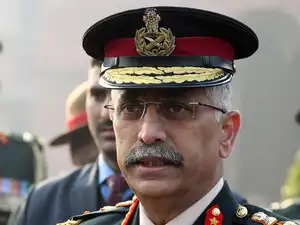
Calling Pakistan’s nuclear bluff, Indian Army Chief General Manoj Mukund Naravane here on Friday said that nuclear weapons are only a “good deterrence”, pointing out that there have been two to three occasions where India has carried out operations against the country without the “nuclear portion” coming into play.
Naravane also said that although the Jaish-e-Mohammed terrorist camp in Balakot, Pakistan has been “reactivated”, it was destroyed in the Indian aerial strikes on it in February last year. He pointed out that the strikes signal that terrorist camps and infrastructure can be taken down and cannot operate with impunity. Naravane, who assumed charge as the Army Chief this week, also said that force is aware of the changing locations of terrorist camps, the number of people there and can distinguish them from the villagers they live near. There are about 25 launch pads across the border in Pakistan and close to 250 terrorists- several of them foreigners- are trying to infiltrate every day into India.
Naravane also said that peace has prevailed in Jammu and Kashmir and the law and order situation is improving, following the abrogation of Article 370 on August 5 last year. On the disputed border with China, he said that India has to be firm in its resolve and assertive to its legitimate claims. He said that this does not mean being aggressive and creating new friction points. He added that while the army keeps reviewing its tactics and deployments along the Line of Actual Control with China, the combination of infrastructure development, surveillance and reserves will ensure that the border is secure. Explaining that while it is impossible to guard every inch of the border, focus has to be on being strong in important areas and dominating less critical areas with surveillance with the capability to move in there in case of an untoward incident.
He said that for modernisation the focus will be on acquisitions for not just fighting the “last war’, but the next one as well. The focus therefore will be technology centric, including on artificial intelligence and robotics.
When asked where have the Balakot air strikes placed the nuclear threshold between India and Pakistan at, Naravane said, “Historically, nuclear weapons are a good deterrence. That is where their role ends… On two to three occasions we have carried out operations without the nuclear portion coming into play.”
On being asked whether the Balakot terrorist facility has been reactivated and whether the strikes achieved any good results, he said, “Definitely they have achieved a lot. During war time when you attack a facility it is always reconstructed. Similarly, we destroyed that camp, but over months they have reactivated it.”
“To say that we didn’t achieve anything as a result of the strikes is not correct. Destruction happened. The important point is that it has signalled that terrorist camps, infrastructure and launch pads can be taken down and cannot operate with impunity. It is a big message, as a result there will be some restraint and note of caution before they do any escalatory action in the future,” he added.
Explaining that terrorist infrastructure still exists across the western border, Naravane said, “The camps location change and we are aware of them, including how many people are staying there. Sometimes they stay near villagers. We have to decipher if they (read as terrorists) are villagers or not. We then make an intelligence picture of the number of camps and the people there and guestimate on the number of people undergoing training and those waiting to cross.”
On the border with China, he said, “We have to be firm in our resolve, but don’t have to be aggressive. We have to be assertive to legitimate claims and that doesn’t mean you have to create friction points…We have to be firm in what we want in the resolution of the boundary question.”
Explaining that tactics along this border are not constant, he said, “We keep reviewing tactics and deployments with changes in technology. Infrastructure, surveillance and reserves will ensure that the border is secure. It is impossible to guard every inch of the border. If we do that then we won’t be strong everywhere. We should be strong in important areas and in less critical areas dominate them with surveillance and have the capability to move there if required.”
from Indian Defence Research Wing https://ift.tt/39AIFXq
via IFTTThttp://idrw.org

No comments:
Post a Comment